Menopause and intimate health: the honest guide nobody gives you
Dryness, laxity or mild leaks during menopause: what happens to your intimate health and which treatments work. A taboo-free medical guide.
Dr. Camila Guzmán · Medical Director
10 min

Hot flushes get talked about. Insomnia, more and more. But intimate dryness, discomfort during sex, laxity, or those small urine leaks when you sneeze… those are barely mentioned, not even at the doctor's office. The result: thousands of women silently accept symptoms that have a name, an explanation and a treatment.
This guide exists to break that silence with rigorous information. We explain exactly what happens to your intimate health with menopause, which signs you do not have to normalize and what real options exist — from the simplest to technology, including the honesty of telling you when what you need is your gynaecologist.
And if you have just become a mother and arrived here looking for a different stage of life, we have a sister guide dedicated to the postpartum period: the pelvic floor has its moment too. Read the postpartum pelvic floor guide →
What changes with menopause (and why you notice it there)
The cause has a first and last name: the drop in oestrogen. This hormone keeps the vaginal mucosa thick, elastic, lubricated and well supplied with blood. When it falls, the tissue becomes thinner and drier, loses collagen and elasticity, the pH changes and the pelvic floor muscles lose tone. It is not your imagination: it is a measurable physiological change.
This set of symptoms has a medical name — genitourinary syndrome of menopause (GSM) — and studies estimate it affects around half of postmenopausal women. Unlike hot flushes, which tend to subside over time, intimate symptoms tend to persist or increase if left untreated. That is exactly the reason not to resign yourself.
Signs you do not have to normalize
Common, yes; "just part of ageing", no. If you recognise yourself in one or more, you deserve an assessment:
- Persistent intimate dryness, with or without sex
- Discomfort, stinging or pain during sexual intercourse
- A feeling of laxity or loss of vaginal tone
- Mild urine leaks when coughing, laughing or exercising
- More frequent urinary urgency than before
- Recurrent urinary or vaginal infections
- Itching or irritation of the area with no apparent cause
- Loss of sensitivity or satisfaction during sex
⚠ If you notice bleeding after menopause, intense pain or rapidly worsening symptoms, do not wait: book an appointment directly with your gynaecologist. That always comes first.
The real options, from least to most
As in all good medicine, there is a ladder. The honest approach is to start on the step that matches your symptoms — and combine them when it makes sense:
1Moisturisers, lubricants and habits
The first stepFor mild dryness and discomfort.
Regular-use vaginal moisturisers (not just lubricants during sex), hyaluronic acid gels, breathable clothing and avoiding harsh soaps. They relieve mild symptoms and accompany any other treatment, but they do not reverse tissue thinning.
2Pelvic floor physiotherapy
Muscle toneFor laxity, mild leaks and prevention.
A specialised physiotherapist assesses your tone and designs a personalised programme. During menopause the pelvic floor loses strength like any other muscle — and like any other muscle, it responds to well-directed training.
3Local hormonal treatment
The gynaecological routeFor moderate or severe GSM symptoms.
Low-dose local oestrogens are an effective, well-studied treatment prescribed and monitored by your gynaecologist. We do not offer it ourselves — and we tell you about it anyway, because an honest guide covers all the options, not just its own. If it is your case, we will point you to that consultation.
4Intimate HIFU with objective measurement
Our reinforcement, when indicatedFor laxity, dryness or mild leaks that persist, in women looking for a non-hormonal, non-surgical option.
Focused ultrasound stimulates collagen regeneration in the mucosa and contributes to tissue tone, in 20-30 minute sessions with no downtime. At Clínica Cambria we apply it with our particularity: laxity measurement by pneumatic pressure before and after, so progress is seen in data and not just sensations. And if you are not a candidate, we will tell you at the first consultation.
5Advanced gynaecological assessment
When the case requires itFor moderate or severe incontinence, prolapse or persistent pain.
Some cases need urogynaecological study and specialised treatment. Detecting them early is key, and no aesthetic treatment should delay that consultation: our policy is to refer you in time, always.
4 ideas worth retiring
✗"It's what happens at my age; you just put up with it."
✓The intimate symptoms of menopause are common, not mandatory. Effective treatments exist at every step — from moisturisers to medical options — and they respond better the earlier they are addressed.
✗"Dryness only matters if you have sex."
✓GSM affects daily comfort: itching, irritation, urinary urgency, recurrent infections. Treating it is quality of life, whether or not you have an active sex life.
✗"At this point there is no solution anymore."
✓Tissue responds to the right stimuli at any age: the mucosa keeps its ability to regenerate collagen. It is never too late for an assessment.
✗"It's embarrassing to consult about this."
✓It is a medical consultation like any other — and one of the most rewarding. At our clinic you have it in private, with a female physician, with complete confidentiality and no rush.
Menopause is not a disease, but its intimate symptoms are not a sentence either. What hurts me most to hear in consultation is 'I thought there was nothing left to do'. There almost always is — and starting is as simple as telling it once, somewhere you are truly listened to.— Dr. Camila Guzmán, Medical Director of Clínica Cambria
Let's talk — privately and with no obligation
At Clínica Cambria (La Cañada, Paterna) the intimate health consultation is private, free and always with a female physician from our team. It includes the objective laxity measurement, and you leave with clear information about your case: which step is right for you, even if it is not with us.
Learn about our non-surgical intimate rejuvenation treatment →
WhatsApp · +34 624 18 52 49Frequently asked questions
Is intimate dryness normal after menopause?
It is very common — it affects around half of postmenopausal women — but being common does not mean resigning yourself. Unlike hot flushes, it does not usually improve on its own over time, which is why it deserves treatment.
What is the genitourinary syndrome of menopause?
It is the medical name for the set of intimate and urinary symptoms caused by the drop in oestrogen: dryness, discomfort during sex, laxity, urinary urgency, mild leaks and recurrent infections. Having a medical name also means having treatment options.
Does intimate HIFU work during menopause?
It is indicated for laxity, dryness and mild leaks at this stage too: focused ultrasound stimulates collagen regeneration in the mucosa. At our consultation we confirm it with a prior assessment and the objective laxity measurement — and if you are not a candidate, we will tell you.
Does it replace hormonal treatment or the gynaecologist?
No. Local oestrogens are an effective treatment prescribed by your gynaecologist, and gynaecological follow-up remains essential. Intimate HIFU is a complementary non-hormonal option, useful above all for those who cannot or prefer not to use hormones.
Can mild urine leaks improve at my age?
Yes. The combination of pelvic floor physiotherapy and, in selected cases, technology such as intimate HIFU improves mild stress leaks at any age. Moderate or severe incontinence needs gynaecological or urological assessment — and we will tell you so clearly.
What does the first consultation include and who sees me?
Always a licensed female physician from our team, in a private, confidential consultation. We listen to your case, perform the objective laxity measurement and explain your options honestly. It is free and carries no obligation.
Does this article replace a medical consultation?
No. It is an informational guide. If you have symptoms, consult your gynaecologist or our medical team; and in case of postmenopausal bleeding or intense pain, go directly to your gynaecologist.
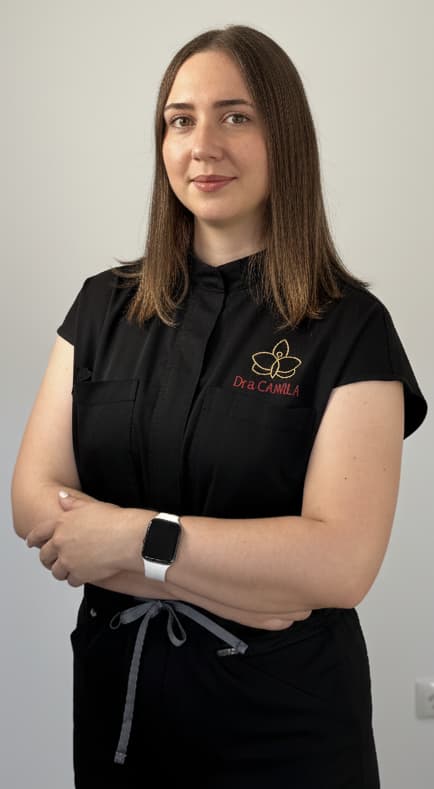
Article reviewed by
Dr. Camila Guzmán
Medical Director of Clínica Cambria · Licensed physician nº 03-0314801
This article is for informational purposes, has been reviewed by the Clínica Cambria medical team, and in no case replaces an individual medical assessment.