Post-summer dark spots: when to treat them and what to do now
September is when dark spots present the bill — but treating them well has its own calendar. When to start a chemical peel, what you can get ahead of in August, and the mistakes that make pigmentation worse.
Dr. Camila Guzmán · Medical Director
7 min
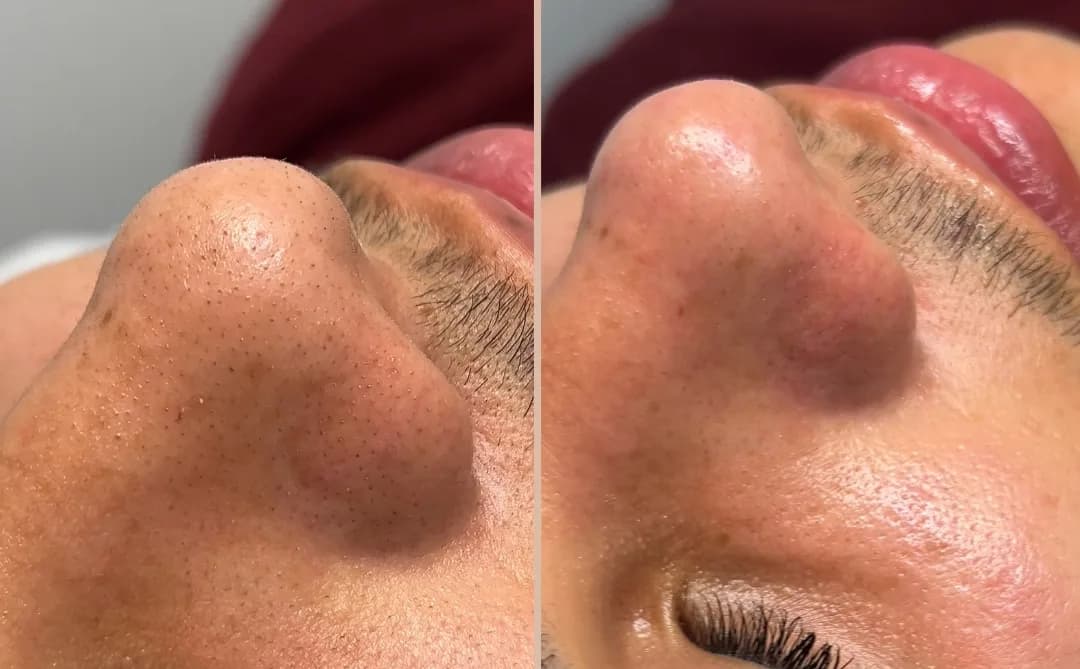
It happens every year: September arrives, the golden beach light is gone, you look in the mirror under your usual bathroom light… and there they are. Spots you could barely make out in June, now darker and more numerous after the summer. It is no coincidence that this is by far the fastest-growing reason for consultation at our clinic between September and November.
The good news: if you are reading this in August or September, you are right on time — just not for what you think. Strong depigmenting treatment is not due yet; what is due now is protecting, diagnosing and planning, so treatment can start at the exact moment the sun eases off. This guide is that calendar.
What summer has done to your skin
Ultraviolet radiation is the great accelerator of pigment: it activates melanocytes — the cells that produce melanin — and after weeks of exposure that production becomes irregular. The result is pigment concentrated where it should not be: sun spots that sharpen, melasma that flares up and acne marks that darken. On top of that, an overall tan hides the spots during summer; once it fades, the contrast makes them far more visible. They did not appear overnight in September — they have been forming all summer.
Not all of those spots are the same, and they are not treated the same way — the whole plan depends on it. If you want to understand the 4 main types and how they differ, we have a full guide dedicated to exactly that:
Why chemical peels are done when the sun eases off
The medical chemical peel — our treatment of reference for evening out skin tone — works by renewing the superficial layers of the skin in a controlled way, which is where most of the summer's pigment has been deposited. But that renewal has a logical consequence: for a few weeks the new skin is thinner and more sensitive to the sun. Doing a peel under July-strength radiation would remove pigment with one hand and provoke it with the other.
How a peel removes summer pigment
After summer
Pigment has built up in the superficial layers
Peel sessions
Controlled renewal that clears the deposited pigment
Renewed skin + SPF
An even tone that daily sun protection maintains
That is why peel season runs from October to spring, when radiation drops and beach days are over. And it is why October fills up fast: whoever arrives in September with the diagnosis done starts earlier, and whoever leaves it for November loses weeks of the best window of the year.
Your anti-spot calendar, month by month
This is how we organise the treatment so you reach spring with an even tone:
1Now, in August
Protect and plan- Broad-spectrum SPF 50 every morning, reapplied if you spend hours outdoors — it is 50% of the result and it starts today, not in October.
- No home remedies and no aggressive scrubbing over the spot: right now they can only make it worse.
- Get the AI facial diagnosis (it is free): we classify your spots, rule out anything that should be seen by a dermatologist, and you leave with your autumn plan closed, budget included.
- If you have melasma, your maintenance routine can start now, under medical supervision.
Goal for the month: the spot stops progressing and the plan is decided.
2October to December
Treat- The chemical peel begins: protocols usually run 3 to 6 sessions, spaced 2 to 4 weeks apart.
- A home depigmenting routine between sessions, chosen for your spot type and skin type.
- The first changes in tone usually show from the second or third session.
- Daily SPF remains non-negotiable: skin under renewal gets more protection, not less.
Goal for the quarter: clear the bulk of the accumulated pigment while the skin is safe from strong sun.
3January to spring
Consolidate- The protocol is completed and you move to maintenance with prescribed topicals.
- We repeat the AI skin map and compare it with August's: you see the progress in your own images, not in promises.
- Before the next summer, reinforced sun protection and a preventive routine — that is how the 'same thing every September' cycle gets broken.
Goal: reach summer with an even tone and a plan to keep it.
The difference between people whose spots improve and people who repeat the same frustration every year is almost never the product: it is the order. Diagnosis first, treatment in its window, protection always.
What not to do about dark spots in high summer
August is the month when the most skin gets damaged by trying to fix it fast:
- !Lemon, vinegar or any citrus on the skin: they are photosensitising, and under August sun they can cause burns and brand-new spots (phytophotodermatitis).
- !Scrubbing the spot hard or daily: irritation inflames, and inflammation pigments. It is the direct route to rebound darkening.
- !Starting a potent depigmenting product on your own (retinoids, high-strength acids) with radiation at its peak and no medical guidance.
- !Covering spots every day with non-SPF make-up and calling the problem hidden: the spot keeps soaking up sun underneath.
- !Waiting 'to see if they fade with the tan': the tan hides them precisely while making them worse.
And rule number one, always: if a spot has changed shape, colour or size this summer, itches or bleeds, it is not a cosmetic matter — see your dermatologist without waiting for any calendar.
In August we don't do the peel: we prepare it. Whoever reaches October with the diagnosis done and the skin protected starts earlier, needs fewer sessions and reaches spring with a different tone. Whoever shows up in January 'to see what can be done' loses exactly the months when the sun plays in their favour.— Dr. Camila Guzmán, Medical Director of Clínica Cambria
Reach October with your plan already made
Start with the AI facial diagnosis at Clínica Cambria (La Cañada, Paterna — 15 minutes from Valencia): we map your skin zone by zone, classify your spots with medical criteria and you leave with your autumn plan and a closed budget. Free and with no obligation.
Book your AI facial diagnosis →Discover our medical chemical peel →
WhatsApp · +34 624 18 52 49Frequently asked questions
Can dark spots be treated in summer?
They can — and should — be protected, diagnosed and, in cases like melasma, maintained under medical guidance. What waits until radiation drops are the intensive treatments such as chemical peels. In summer you plan; in autumn you treat.
When is the best time to start a chemical peel?
The season runs from October to spring, when solar radiation drops. The ideal moment for a first session is usually October: it leaves enough margin to complete the whole protocol within the lower-sun months.
How many peel sessions will I need for my spots?
It depends on the type of spot and how deep the pigment sits: protocols usually run 3 to 6 sessions spaced 2 to 4 weeks apart, combined with a home routine. At the diagnosis we give you the exact number for your case, with realistic expectations.
How much does treating dark spots cost?
A chemical peel starts at €60 per session, and the total cost depends on the type of peel and the number of sessions in your protocol (usually 3 to 6). What is fixed: the AI facial diagnosis is free, and you leave it with a closed budget before deciding anything.
Is melasma also treated in autumn?
Melasma is managed all year round: strict sun protection and a maintenance depigmenting routine have no season. In-clinic treatments follow specific, prudent protocols — with melasma, aggressiveness is paid back with rebound pigmentation.
Should I worry about a spot that changed this summer?
Any spot that changes shape, colour or size, itches, bleeds or has irregular borders should be seen by a dermatologist, not an aesthetic clinic. In our practice, at the slightest doubt, referral is immediate and comes before any treatment.

Article reviewed by
Dr. Camila Guzmán
Medical Director of Clínica Cambria · Registered physician no. 03-0314801
This article is for informational purposes only, has been reviewed by the Clínica Cambria medical team and does not replace an individual medical assessment under any circumstances.