INDIBA, tecar therapy and 448 kHz radiofrequency: what they are and how they differ
What INDIBA is and what science says about 448 kHz radiofrequency: real results, uses and per-session prices in Valencia. A medical guide.
Dr. Camila Guzmán · Medical Director
11 min
You have probably heard the word INDIBA from a friend, your physiotherapist or on social media, almost as a synonym for "radiofrequency". It has become so popular that many people use it to name the whole treatment, without realising it is actually a brand. In this guide we explain, with medical honesty, what INDIBA is, why it is so well known, what this type of treatment really does according to the evidence, and what we can offer you at Clínica Cambria with 448 kHz technology.
Let's start with the most important and most transparent point: our device is not the INDIBA brand. And throughout the article you will see why that matters far less than the advertising leads you to believe — and what actually makes the difference in results.
What is INDIBA and why does it sound so familiar?
INDIBA is a Spanish company founded in Barcelona in 1983 by José Calbet, dedicated for decades to the research and development of radiofrequency equipment. Its 448 kHz system —which they call Proionic® technology— became a benchmark in physiotherapy, sports recovery and aesthetic medicine, with more than 40 years of history, multiple patents and international presence. That track record and that investment in research are genuine merits of the brand.
Its success has been such that the name has almost "swallowed" the category: some people say "give me an INDIBA" the way we say "a Kleenex". But it is worth being clear about the difference: INDIBA is a commercial brand; the treatment itself is 448 kHz radiofrequency, technically called capacitive-resistive electric transfer (CRET), and known in physiotherapy as tecar therapy.
INDIBA at a glance
- Founded
- In 1983, in Barcelona
- Technology
- 448 kHz radiofrequency (Proionic®)
- Used in
- Physiotherapy, sport and aesthetics
- It is
- A brand, not the name of the technique
What the treatment actually does (the 448 kHz)
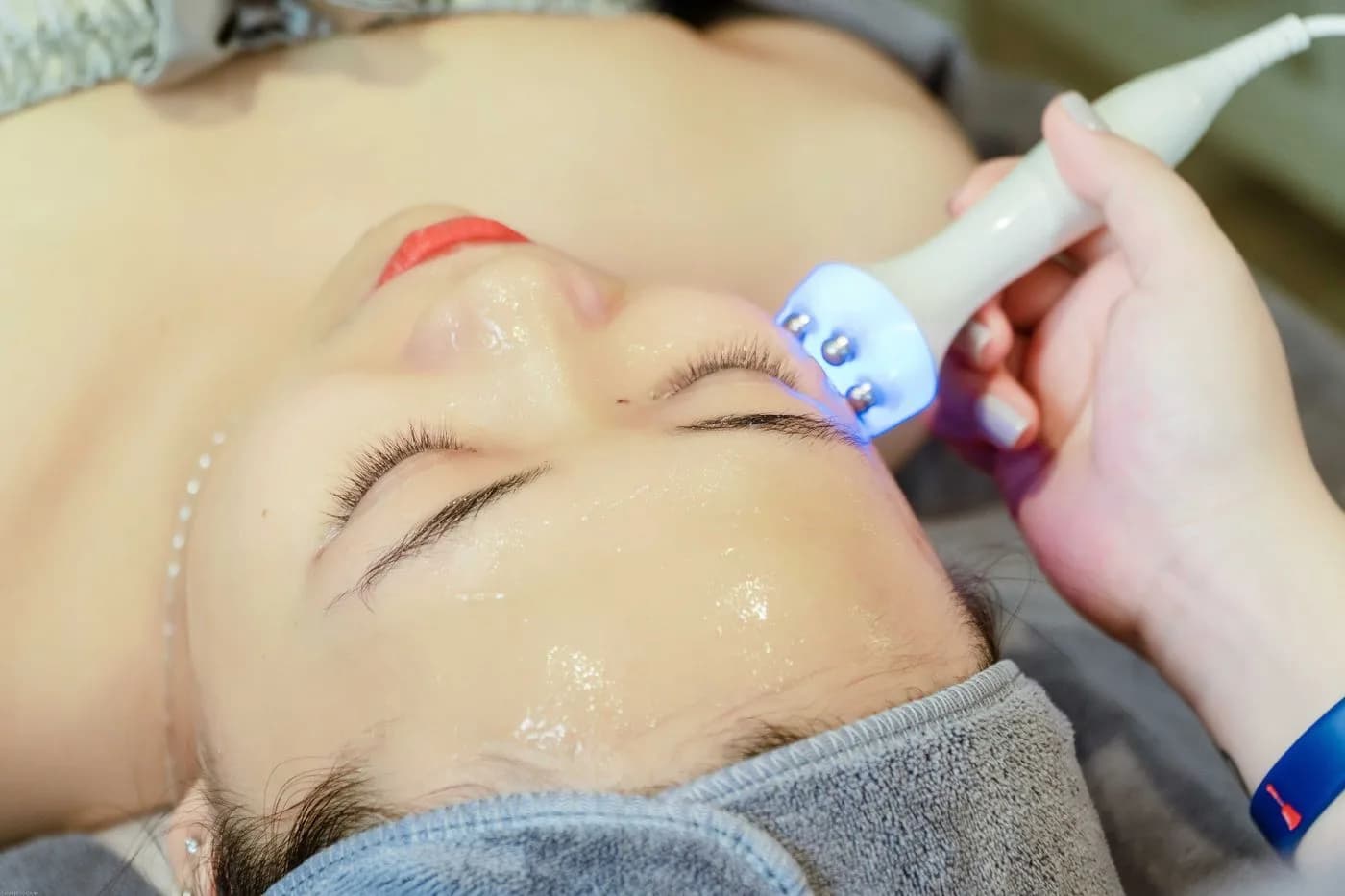
All the devices in this family —INDIBA and others— rely on the same physical principle. A high-frequency current (around 448 kHz) passes through the tissues and generates heat from within, deeply and in a controlled way. It is not heat applied on top of the skin, but heat produced in the tissue itself. This warming activates microcirculation and local metabolism, and stimulates the cells responsible for producing collagen.
The treatment works in two complementary modes, and knowing how to combine them is much of the art of a well-performed session:
Capacitive mode (CET)
Concentrates the effect on more superficial, water-rich tissues —skin and subcutaneous fat—. Ideal for skin quality, superficial firmness and activating circulation.
Resistive mode (RET)
Reaches deeper, denser structures —muscle, tendon, fascia—. It is the one most used in muscle recovery and in more marked sagging.
What the scientific evidence says (without exaggerating)
This is where we separate marketing from facts. 448 kHz radiofrequency has published research, and it is only fair to acknowledge both what it shows and its limits:
An in vitro study on human mesenchymal stem cells observed that 448 kHz stimulation increased their proliferation by around 25 %, while keeping their ability to differentiate intact. It is a plausible biological basis for the effect on tissue regeneration.
Hernández-Bule et al., Cellular Physiology and Biochemistry, 2014
A review of 30 studies in physiotherapy and sport confirmed that the therapy consistently increases skin temperature and blood flow, with pain reduction in cases such as knee osteoarthritis and low back pain.
De Sousa-De Sousa et al., Int. J. Environ. Res. Public Health, 2021
That same review warns that the average quality of the studies is only "good/fair" and that more rigorous trials are needed. Translation: it is a technology with real, demonstrable physiological effects, but not a miracle treatment. Be wary of anyone who promises miracles.
Conclusion of the 2021 review itself
What this means for you: 448 kHz radiofrequency improves skin quality and firmness, activates circulation and helps with tissue recovery, progressively and with consistency. It does not slim you down on its own, nor does it replace surgery; it is a powerful tool within a well-designed plan.
So, does it matter that it isn't the INDIBA brand?
The honest answer is: it matters far less than it seems. The 448 kHz frequency and the capacitive and resistive modes are physics, not the property of a single brand. INDIBA has patents, a recognised device build and a very solid clinical training programme —legitimate strengths, which is why its cost is higher—. But the underlying mechanism, endogenous heat at 448 kHz, is the same type of treatment applied by other devices in the category.
And here is what really decides your result, far more than the logo on the device: who applies the treatment and how. The same machine, in different hands, gives different results. A good diagnosis, choosing the right mode, electrode and intensity for your tissue, a coherent protocol and realistic expectations: that is what separates a session that works from one that just feels warm.
The machine does not make the result; the judgement with which it is used does.
What we bring at Clínica Cambria
We work with a 448 kHz radiofrequency device —the same frequency and the same CET/RET modes of the category— and put it at the service of care with medical judgement:
The same core technology
448 kHz radiofrequency with capacitive and resistive modes, to work on both skin quality and deep planes.
Medical diagnosis and supervision
It is not just aesthetics: we assess your case, rule out contraindications and define realistic goals before starting.
Personalised protocols
Facial or body, adapting mode, electrode and intensity to your skin and your goal, and combining it with other treatments when it adds value.
Honesty and clear pricing
We tell you what it can and cannot do for you, with a free first assessment and a fixed quote without surprises.
In radiofrequency, the right question is not 'what brand of machine do you use', but 'who assesses me and with what judgement do they treat me'. That is where the result lies, and where a medical clinic makes the difference.— Dr. Camila Guzmán, Medical Director of Clínica Cambria
Interested in 448 kHz radiofrequency?
At Clínica Cambria (La Cañada, Paterna) we assess your case with no obligation and explain transparently what our 448 kHz radiofrequency can offer you, on the face or body. The first consultation is free.
448 kHz facial radiofrequency →448 kHz body radiofrequency →
WhatsApp · +34 624 18 52 49Frequently asked questions
Is it the same as INDIBA®?
No. INDIBA® is a registered trademark of another manufacturer and our device is not INDIBA. What we do share is the essence of that treatment category: the 448 kHz frequency and the capacitive and resistive work (CET/RET). It is the same physical principle, applied with medical judgement at our clinic in La Cañada.
Why is INDIBA better known and usually more expensive?
Because of its track record: 40 years as a brand, investment in research, patents and a powerful training and marketing programme. All of that has real value and is reflected in its price. It does not mean it is the only device capable of applying 448 kHz radiofrequency with good results.
If it isn't INDIBA, does it work the same?
The mechanism —deep heat at 448 kHz with CET and RET modes— is the same. What most influences your result is not the brand of the device, but the diagnosis, the protocol and the professional hand applying it. That is why we approach it from a medical assessment.
Does radiofrequency help you lose weight?
It is not a weight-loss treatment. It improves firmness and skin quality, the appearance of cellulite, circulation and tissue recovery. It can accompany a body-contouring process, but weight loss depends on diet, exercise and, where appropriate, medical follow-up.
How many sessions do I need and when will I see results?
It depends on the goal and your tissue. There is usually a luminosity and comfort effect from the first session, while the deeper result is built with protocols of several sessions and their maintenance. At the assessment we give you a specific, realistic plan.
Does it hurt or require downtime?
No. It feels like a pleasant warmth, similar to a warm massage, with no pain or anaesthesia, and you can resume completely normal life afterwards.
Is it safe? Who should not have it?
It is a technology with a very high safety profile and decades of use. It is not indicated during pregnancy, in people with pacemakers or other electronic implants, over metal prostheses in the area, or with infections, active wounds or thrombosis. That is why we always carry out a prior medical assessment.
Sources
- Hernández-Bule ML, Paíno CL, Trillo MÁ, Úbeda A. "Electric Stimulation at 448 kHz Promotes Proliferation of Human Mesenchymal Stem Cells". Cellular Physiology and Biochemistry, 2014.
- De Sousa-De Sousa L, et al. "Application of Capacitive-Resistive Electric Transfer in Physiotherapeutic Clinical Practice and Sports". International Journal of Environmental Research and Public Health, 2021.
- INDIBA Group — Corporate information (founding, Proionic® 448 kHz technology).
Article reviewed by
Dr. Camila Guzmán
Medical Director of Clínica Cambria · Licensed physician nº 03-0314801
This article is for informational purposes, has been reviewed by the Clínica Cambria medical team and does not replace an individual medical assessment. INDIBA® is a registered trademark of its owner; Clínica Cambria is not associated with that brand and its radiofrequency device does not belong to it. References to the brand are made for informational and comparative purposes.